Boat Engine: A Technical Guide to Choosing the Right Powertrain

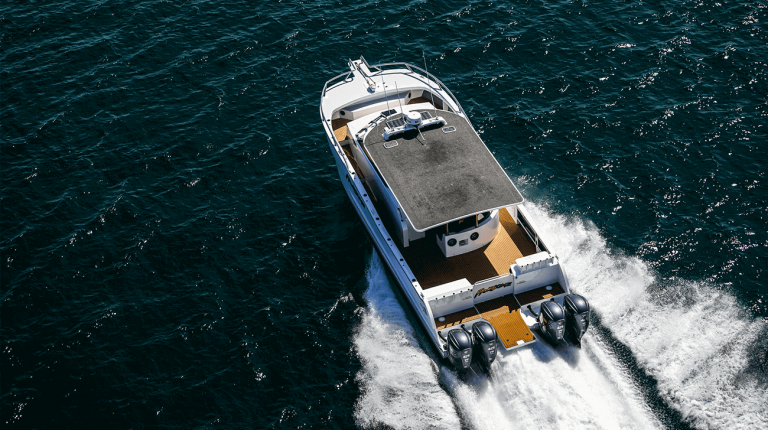
Du thuyền với 4 động cơ tàu thuỷ gắn ngoài Yamaha
A yacht powered by four Yamaha outboard motors

Selecting the right boat engine is decisive for performance and life-cycle cost. Beyond horsepower, a boat engine choice should weigh drive type, operating environment, maintenance planning, fuel consumption, noise/vibration, and maneuverability in tight marinas or shallow waters. This guide summarizes common boat engine types and their technical characteristics to support data-driven decisions.

Types of engines

Outboard Motor: Strengths, Setup, Maintenance

Động cơ tàu thuỷ gắn ngoài Yamaha
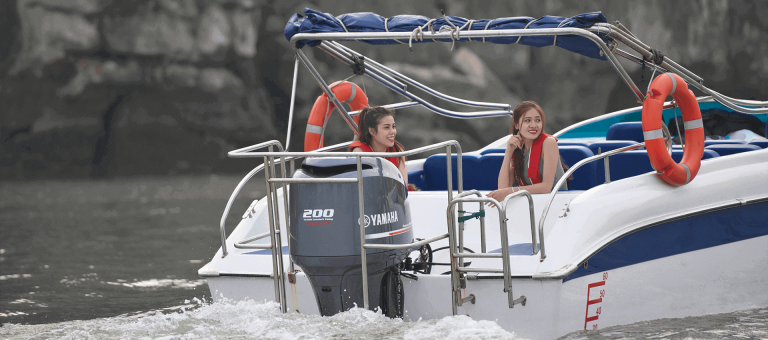
Yamaha Outboard Motor

An outboard is an integrated module—engine, gearbox, drivetrain, and steering—mounted on the transom, with the entire unit turning to steer. Strengths include a high power-to-weight ratio, quick throttle response, early planing of planing hulls, and precise low-speed control. Maintenance is convenient because the unit sits outside the hull with easy access, and parts availability is strong. Installation should control engine height relative to the water surface (anti-ventilation plate position), match propeller selection to load and use case, and right-size power to operate in the optimal cruising RPM band. In saltwater, a comprehensive corrosion-protection system is required: coatings, sacrificial anodes, suitable cooling-circuit materials, and drivetrain components.

Inboard Shaft: Stability & Fuel Economy

Động cơ tàu thuỷ Nanni
Nanni Diesel Engine

The engine is placed inside the hull and transmits power through a gearbox, shaft, and propeller. Diesel is predominant thanks to strong low-RPM torque, durability, and fuel economy on long passages. A low center of gravity improves stability for workboats, commercial craft, and larger yachts. Installation and alignment of the shaft, thrust bearing, and concentricity demand high precision; small deviations can cause vibration and abnormal wear. Maneuverability in tight marinas is generally less responsive than outboards or flow-directing systems.

Boat Engine Waterjet: Shallow-Water Agility & Safety

HamiltonJet HJ292 được sử dụng trên tàu tuần tra.
HamiltonJet HJ292 Waterjet

This system draws in water, pressurizes it, and expels a jet through a nozzle, with no exposed propeller. The architecture improves safety around people and floating equipment, offers agile handling (quick reversals, rapid stops), and suits shallow waters. Efficiency at low speeds is typically lower than with conventional propellers; intake design, impeller selection, and power must be matched to hull form and hydrodynamic conditions to ensure overall effectiveness.

Why Modern Outboards Are Popular

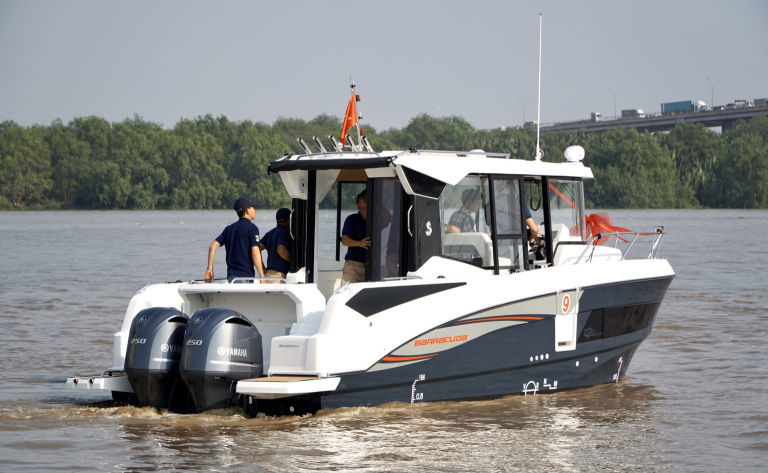
Modern 4-stroke Outboard Motors EFI outboards deliver reasonable fuel consumption, reduced noise and vibration, high reliability, and low weight. For coastal transport, leisure/tourism, and watersports, outboards provide outstanding overall value: quick installation, convenient maintenance, and an optimal power-to-weight ratio. In higher power bands (200–450 hp), twin/triple/quad configurations can meet speed and tractive requirements for work canoes and mid-size yachts.

YAMAHA 4 Stroke 250HP – Model F250DET

Conclusion

There is no single boat engine configuration “best for every case.” The optimal solution depends on mission, hull, payload, and cruising speed range. 4-stroke EFI outboards suit flexible scenarios requiring easy maintenance and high power-to-weight ratios; inboard diesels meet heavy-duty, long-range, and fuel-efficient needs; waterjets fit shallow-water operation and high maneuverability with propeller safety. Standards-compliant design and operation should be grounded in technical data, a matched drivetrain, and disciplined maintenance to optimize performance and life-cycle cost.